
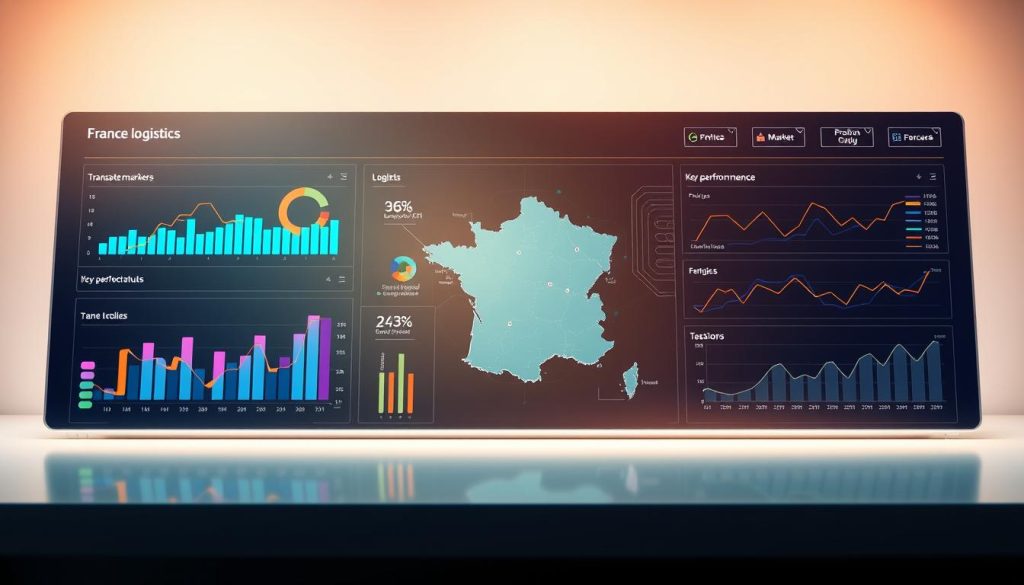
The French market is full of chances for UK businesses looking to grow in Continental Europe. With e-commerce growing fast, France’s €200+ billion logistics sector needs new ideas that mix tech with top-notch operations.
We’re seeing big changes in the supply chain world. People want quicker, clearer delivery services. This makes tech-based solutions a must, not just a nice-to-have. Companies that get on board with new tech early will have a big edge.
In this detailed guide, we’ll give UK companies a clear plan for entering this lively market. We’ll look at how to do market research, set up operations, and keep improving. Our step-by-step guide has all you need to succeed in France’s changing market.
Understanding the French Digital Logistics Landscape
To grasp France’s digital logistics sector, we must look at its geography, consumer needs, and tech advancements. This mix creates a unique market. Here, old freight forwarding meets new digital platforms, changing supply chain management. This mix defines the French logistics sector and brings both challenges and chances for UK businesses looking to enter.
The French logistics industry has many layers. Traditional players like freight forwarders, warehouses, and transport providers have been around for decades. But new digital platforms are also emerging. They connect shippers with carriers using smart algorithms and automated systems.
These tech solutions have made operations more efficient and clear. Before, everything was done manually or over the phone.
France’s location is key for UK businesses to understand. It’s a gateway to the UK, Southern Europe, and the rest of the continent. Being in France gives access to French and European markets.
The country has a great motorway system, fast trains, and big ports. Places like Marseille, Le Havre, and Dunkirk are major hubs for trade.
E-commerce logistics is changing the French market fast. Online sales are growing quickly, leading to a big demand for fast and flexible delivery. Traditional logistics struggle to keep up with these new needs.
Now, people want their goods in hours, not days. This puts pressure on the whole supply chain.
| Logistics Model | Primary Characteristics | Technology Integration | Market Position |
|---|---|---|---|
| Traditional Freight Forwarding | Established networks, relationship-based service, manual processes | Basic tracking systems, email communication, legacy software | Dominant in B2B segments, declining market share |
| Digital Logistics Platforms | Automated matching, transparent pricing, real-time visibility | AI-driven routing, mobile applications, API integrations | Rapidly growing in B2C and progressive B2B sectors |
| Hybrid Operators | Traditional assets with digital interfaces, gradual modernisation | Customer portals, partial automation, digital payment systems | Transitioning market share, competitive in mid-market |
| E-commerce Specialists | Last-mile focus, flexible delivery options, customer-centric design | Advanced tracking, delivery preferences, returns management | Strong growth in consumer logistics, expanding capabilities |
The industry is going through a big digital transformation. Old players are investing in new tech. They’re buying startups, making their own platforms, and teaming up with software companies.
New companies are also using tech to stand out. They build their businesses on digital platforms, without old systems or traditional ways of working. This makes the market more dynamic and keeps customer expectations high.
Consumer needs in France have changed a lot. They want flexible delivery times, precise delivery windows, and the chance to change delivery addresses. Real-time tracking is now expected, not just a nice-to-have.
People also care about the environment when buying things. They prefer companies that use electric vehicles, group deliveries, and offset carbon emissions.
Big cities like Paris, Lyon, and Marseille play key roles in logistics. Paris is the main hub, with a big population. Lyon is important for getting goods to Southern Europe. Marseille is key for international trade coming from the Mediterranean.
But digital transformation is also reaching smaller cities and rural areas. Places like Toulouse, Bordeaux, and Strasbourg are getting better logistics. Even rural areas are getting more connected.
This growth means logistics needs to serve different areas, not just big cities. The support for this includes better internet, mobile networks, and automated parcel lockers in smaller places.
Understanding the French logistics sector is key for our market entry. We can’t just copy what works in the UK. We need to adapt to French market dynamics, what customers want, and the competition. This knowledge guides every decision, from tech choices to how we serve customers.
How to Conduct Comprehensive Market Research for Digital Logistics
Starting in the French digital logistics market needs thorough research. We must gather real data to turn guesses into useful knowledge. This careful approach lowers risks and finds the best chances for UK businesses.
Good market research uses many methods to get a full view of the market. It’s important to spend enough time on this step before putting in a lot of money. The insights we get will shape all our future plans.
Our research looks at three key areas to see if a market is good. Each part adds its own value and helps us understand the French digital logistics scene better.
Identifying Key Market Players and Competitors
The French logistics market has a mix of big companies and new digital players. We need to map out both to see who’s competing. This competitive analysis shows where UK businesses can stand out.
Big names like Geodis and XPO Logistics handle big supply chains. They offer lots of services with big networks. But, they might not be as flexible or quick to meet special needs.
New companies like Cubyn and Shippeo show the market’s tech growth. They use advanced software for real-time tracking and automation. Their success shows people want tech to make things more efficient.
We suggest making a detailed table to compare competitors:
- Service offerings: List what each competitor does
- Technology capabilities: Check how advanced their tech is
- Pricing structures: Look at how they charge to find good spots
- Market positioning: See how they’re seen and who they target
- Geographic coverage: Map where they operate
Groups like TLF (Fédération des entreprises de Transport et Logistique de France) give useful info. Magazines like Logistiques Magazine share trends and moves. Talking directly to French customers gives real views on competitors.
Analysing Consumer Behaviour and Demand Patterns
French shoppers have different wants than those in the UK, affecting logistics. We must know these to offer what they want. This research helps avoid mistakes in meeting customer needs.
French people often prefer points relais (pickup points) over home delivery. This shows how they live and what they value in delivery. Providers need to use these points to stay competitive.
Being on time with deliveries is very important in France. Customers want specific times, not just a range. This means logistics services need to plan routes well and keep customers updated.
Being green is important to French shoppers. They like providers who reduce carbon and use eco-friendly ways to deliver. This is a chance for UK businesses to stand out by being green.
To get real data, we use many ways:
- Do surveys with French e-commerce businesses about their logistics needs
- Talk to logistics managers in the UK and France
- Go to French logistics trade shows to see the market
- Look at customer reviews to see what people like and dislike
Secondary research adds to this by using government stats and reports from Xerfi. These give numbers on how the market is growing and what’s expected. They help us understand the size of the market and where to find opportunities.
Evaluating Market Entry Barriers and Opportunities
Knowing the challenges and chances helps us plan a smart entry. We must be honest about what we can handle. This careful planning helps avoid rushing in and finding good ways to start.
There are big hurdles in the French digital logistics market:
| Barrier Category | Specific Challenges | Impact Level |
|---|---|---|
| Regulatory Requirements | Transport licensing, labour regulations, post-Brexit customs procedures | High |
| Capital Intensity | Infrastructure investments, technology platforms, vehicle fleets | Medium-High |
| Established Relationships | Incumbent provider contracts, customer switching costs, network effects | Medium |
| Cultural Considerations | Language requirements, business practice differences, regional variations | Medium |
Big cities in France make delivery hard because of traffic. Rules for drivers are different from the UK. And, new customs rules after Brexit make things harder for cross-border trade.
But, there are big chances too. Many small businesses in France need better logistics tech. This is a chance for UK businesses to offer tech at good prices.
There are also chances in other cities in France, not just Paris. Places like Lyon, Marseille, Toulouse, and Bordeaux are growing fast. They have less competition, so UK businesses can get a strong start.
Technological innovation makes it easier to start in France. Cloud tech means less money up front. Digital marketplaces help connect providers with customers easily. These changes make starting a business in France easier than before.
We should write down what we find in a clear way to guide our future plans. This careful research helps us enter the French market wisely. It increases our chances of success and growth in the digital logistics sector.
Step 1: Assessing France’s Digital Infrastructure and Connectivity
Our first step is to check France’s digital setup and connectivity. This helps us see if our logistics can use the latest tech that customers want. Without the right check, we might invest in tech that doesn’t work well locally.
France has a top-notch telecom network, with lots of 4G and growing 5G in big cities. Its fibre-optic network is great for fast data, key for transportation management systems and tracking. We need to make sure our chosen places have the right internet for our tech.
Technology Readiness Across Different French Regions
France’s tech readiness varies by region, posing both challenges and chances for logistics. Big cities like Paris, Lyon, and Marseille are tech-ready, like global leaders. These places have the digital setup for advanced logistics.
In rural areas, the internet and mobile coverage are different. We need to find solutions for these places to keep our services good.
When looking at tech readiness, we should check a few things:
- Mobile network coverage quality for tracking and driver talks
- Broadband internet speeds for cloud-based systems
- Local digital literacy levels among workers and partners
- Technology infrastructure investments by local authorities
- Availability of technical support services for tech upkeep
Using tech like IoT sensors and automated systems depends on the region’s tech. We should match our tech investments with what’s available locally. This ensures we’re efficient and don’t waste money on tech that can’t be used.
Knowing these differences helps us plan our tech strategy better. Places with good connectivity can use the latest tech. Areas with less can start with simpler tech or mix old and new methods.
Strategic Logistics Infrastructure and Network Mapping
Understanding France’s logistics setup is key for entering the market. The country has major roads, ports, and warehouses. Knowing how these work together is vital for moving goods well.
France’s motorways are key for road freight. The A1 goes from Paris to the North and borders. The A6 and A7 connect Paris to the South and Mediterranean ports. Being close to these roads cuts down on travel time and costs.
Ports in Le Havre and Marseille are big for international freight. Le Havre gets a lot of containers from across the Atlantic. Marseille links to the Mediterranean and Southern Europe. We need to decide if we need to be near ports or use inland points.
Rail freight is a green option for some goods. France’s rail network connects big industrial areas and Europe. Intermodal terminals where rail meets road are great for moving cargo efficiently.
The table below shows key logistics hubs in France. It helps us pick the best places for our operations:
| Logistics Hub | Key Infrastructure | Connectivity Advantages | Primary Market Access |
|---|---|---|---|
| Île-de-France Region | Charles de Gaulle Airport, A1/A6 motorways, rail terminals | Advanced digital infrastructure, 5G coverage, extensive fibre networks | Paris metropolitan area, Northern Europe connections |
| Lyon-Rhône Corridor | A6/A7 motorways, Lyon-Saint Exupéry Airport, rail junction | High-speed connectivity, growing 5G deployment, strong broadband | Southeast France, Italian and Swiss borders |
| Marseille-Fos Port Area | Major seaport, A7 motorway, rail freight terminals | Robust 4G coverage, expanding fibre infrastructure | Mediterranean trade, Southern European markets |
| Le Havre-Normandy Hub | Container port, A13/A29 motorways, Seine river access | Reliable connectivity, planned infrastructure upgrades | Atlantic trade routes, Paris supply chain |
Charles de Gaulle Airport is key for fast air freight. Its big cargo facilities and global links are vital for quick logistics. We should think if our services need air freight and the costs.
Urban centres are important for efficient last-mile delivery. These centres help consolidate cargo before final delivery. Big French cities often require or encourage using these centres for city deliveries.
This detailed check helps us make smart choices about where to operate, what tech to use, and what services to offer. By matching our strategy with France’s logistics, we can meet French customers’ needs for speed, reliability, and clear info. Knowing the tech and physical setup helps our operations fit well into France’s logistics scene.
Step 2: Establishing Your Legal Business Presence in France
Setting up a legal structure in France is key to working in the digital logistics sector. Without the right setup, UK companies can’t legally do business, open bank accounts, or sign contracts with French partners. This step turns your plans into real action.
The legal setup you choose affects your taxes, risks, and admin tasks in France. For digital logistics, picking the right structure impacts things like employment and data protection. We help you get this right to start strong.

Understanding French Corporate Structure Options
UK companies have three main ways to set up in France. Each option has its own rules that affect how you operate and follow the law. Knowing these options helps you make the best choice for your digital logistics plans.
A subsidiary (société filiale) is a separate legal body in France, giving you full control. It’s good for big investments in France’s digital logistics. You need at least €37,000 for a Société Anonyme (SA) or €1 for a Société par Actions Simplifiée (SAS), but more is often needed.
The branch office (succursale) is an extension of your UK company, not a separate one. It’s easier to set up and keeps you connected to your UK business. It’s great for testing the French market first.
A representative office (bureau de liaison) lets you do market research and build relationships without direct sales. It’s good for exploring the market but can’t make money or sign contracts.
After Brexit, UK companies face new rules in France. They’re treated like non-EU businesses, needing more paperwork and possibly a local director. Getting help from experts is more important than ever.
Essential Documentation and Registration Procedures
Setting up a company in France needs careful preparation and following rules. The paperwork shows France’s strict approach to law and business. Missing or wrong documents can delay your start in France.
You’ll need to prepare documents like articles of association, director details, and proof of a French office. Directors must show their passport, recent bills, and criminal records. This applies to all directors, even if they’re not in France.
The process starts at the Centre de Formalités des Entreprises (CFE). The CFE works with many government bodies. This makes the process easier than dealing with each one separately.
Once approved, your company gets important numbers like the SIRET number and SIREN number. These are on all official documents and invoices. You’ll also get a VAT number, key for digital logistics with cross-border sales.
| Entity Type | Minimum Capital | Formation Timeline | Director Requirements |
|---|---|---|---|
| SAS (Simplified Joint-Stock) | €1 (recommended €5,000+) | 4-6 weeks | Flexible structure, no residency requirement |
| SARL (Limited Liability) | €1 (recommended €7,500+) | 4-6 weeks | Minimum 1 manager, French resident preferred |
| SA (Public Limited) | €37,000 | 6-8 weeks | Minimum 2 directors, complex governance |
| Branch Office | No capital requirement | 3-5 weeks | Accredited representative required |
UK businesses face challenges in finding a French office address. French rules require a real address, not just mail forwarding. Many use serviced offices for a legitimate address without a long-term lease.
Professional Nominee Solutions for Compliant Operations
Nominee services help UK businesses meet French local presence rules while keeping control from the UK. These services use qualified people as directors or shareholders, meeting legal needs without losing control or ownership.
A nominee director handles official duties and signs documents. They keep your business in line with French laws. These services also protect your privacy by keeping your identity hidden while following the law.
Nominee services are very useful for digital logistics. They help with banking and contracts in France. Having a French director shows you’re serious about the market and makes business easier.
Setting up nominee services needs careful planning to follow French law. The right agreements protect everyone involved. Professional services know how to set this up right.
Streamlined Registration Through Specialist Support
Trying to navigate French rules without help can lead to delays and problems. LerriHost helps UK businesses in France’s digital logistics. They make setting up a company easy.
LerriHost handles everything from choosing a structure to final registration. They make sure your documents are right for France. This means you can start making money faster.
LerriHost also introduces you to nominee services. This gives you the French presence you need without needing to be there. It’s great for banking and credibility.
UK businesses can call LerriHost at 07538341308 for help. They’ll find the best structure and support for your business. They consider your budget and growth plans.
LerriHost also helps with ongoing compliance. They keep you up to date with French laws and handle annual filings. This keeps your business in good standing in France.
Getting your business right is more than just following rules. It affects your banking, how customers see you, and partnerships with French companies. A strong presence shows you’re serious and reliable in France’s business culture.
Investing in the right setup pays off. It makes your business run smoothly, builds trust, and reduces risks. Trying to do it yourself can be costly and slow. Experts help you avoid these problems and grow your business.
Step 3: Setting Up Banking and Payment Processing Infrastructure
Once you’ve set up your business legally, it’s time to focus on banking and payment processing. This is key for your logistics to run smoothly in both the UK and France. Without good banking solutions and payment processing, even the best logistics can’t meet French clients’ high standards.
Your financial setup affects how well you operate, manage cash, and compete. French logistics clients look at your financial services and transaction abilities as much as your service quality. Your banking needs to handle the unique cash flow of logistics, including fuel costs and seasonal changes.
Dealing with French banking rules while keeping UK operations can be tough. You need to plan carefully and get expert advice on documents, rules, and how to integrate everything.
Selecting Banking Solutions for International Logistics Operations
Choosing the right French banks is essential for your financial base. Big banks like BNP Paribas, Société Générale, and Crédit Agricole offer services for international businesses. They know the logistics sector well and provide special facilities for freight, storage, and distribution.
International banks like HSBC and Barclays are also good options for UK businesses. They offer services in both markets, making treasury and cross-border transactions easier. Choose a bank that offers more than basic accounts, like trade finance and digital banking that works with logistics software.
Opening a French business account now needs more paperwork due to anti-money laundering rules. You’ll need company documents, ID for directors, and details about your business and who owns it. French banks do a lot of checks, which can make opening an account take weeks.
Logistics needs special banking services that regular accounts can’t provide. You might need escrow for safe payments, trade finance for international shipments, and merchant services for customer payments. These services are key for smooth operations.
Managing cash flow is critical for logistics businesses. They often have to wait 30 to 60 days for payments, while fuel suppliers need quicker cash. Your bank should understand these needs and offer the right financial help.
LerriHost helps UK logistics businesses find the right French banks and payment solutions. We use our connections to make setting up accounts and payment systems easier. Our knowledge helps you meet French banking rules and build a strong financial base.
Implementing Secure Payment Processing Systems
French customers pay differently than those in the UK, so you need the right payment processing systems. The CB card is big in France, and you’ll need to handle it along with international cards. This ensures you can serve French customers well.
SEPA direct debits are great for regular payments in France. Many businesses prefer them for things like shipping and storage. Using SEPA direct debits can save money and make cash flow easier to manage.
Digital payments are becoming more popular in France. PayLib, a mobile payment service, is one option. Using different payment methods shows you understand the market and makes things easier for customers.
Integrating payment systems with your logistics software makes things run smoother. It automates invoicing, tracks payments, and gives you financial reports. This lets your team focus on delivering service, not dealing with payments.
Security is key in payment systems. You need to follow PCI DSS to protect customer data. French data protection laws, like GDPR, also have rules for handling personal payment info. Your systems must use encryption and secure login to meet these standards.
| Payment Method | French Market Penetration | Typical Transaction Cost | Integration Complexity |
|---|---|---|---|
| Carte Bancaire (CB) | 78% of card transactions | 0.5% – 1.2% | Moderate |
| SEPA Direct Debit | High for B2B recurring | €0.10 – €0.50 per transaction | Low to Moderate |
| International Cards (Visa/Mastercard) | 22% of card transactions | 1.5% – 2.9% | Low |
| Digital Wallets (PayLib, PayPal) | Growing, mostly in e-commerce | 1.8% – 3.4% | Moderate |
Transaction costs vary a lot, affecting your profit margins. CB cards are cheaper for domestic transactions, while SEPA direct debits are best for regular payments. Choosing the right payment method is important for keeping costs down and pleasing customers.
Managing Multi-Currency Transactions Efficiently
Handling transactions in both pounds and euros is a must for UK and French markets. Exchange rate changes can hurt your profits if not managed well. A 2-3% change can wipe out margins on international deals.
Forward contracts help protect against currency risks for steady income. They lock in exchange rates for future deals, keeping your margins safe. This is good for businesses with regular French income, as it helps budgeting and pricing.
Dynamic currency conversion lets customers pay in their preferred currency. This makes things easier for French customers but might cost more. It’s important to compare this with other options.
Good treasury management can cut down on foreign exchange costs. Matching euro income with euro expenses reduces the need for currency conversions. Keeping euro accounts for French expenses also saves money.
Currency risk isn’t just about transaction costs. It also affects financial statement translations. Understanding both transaction and translation risks is key to managing your business’s value.
Using multi-currency accounting systems gives you real-time views of currency positions. These systems track gains and losses, help with reporting, and ensure tax compliance. Investing in good treasury management tech is important as your business grows.
LerriHost offers help with setting up your financial base through banking and payment processing services. We connect you with French banks and payment providers that get logistics. Our experience makes setting up easier and faster.
By contacting LerriHost at 07538341308, you get help with French banking rules and setting up financial systems. Good payment systems and cash flow management are key for success in France. We make sure your financial setup supports your growth plans.
The financial setup you create now will shape your business for years. Investing in banking solutions for international logistics pays off. It reduces costs, improves cash flow, and builds trust with French partners. Your financial systems should match your logistics technology and service quality.
Step 4: Building Your Digital Logistics Platform with WordPress
Creating a strong online presence with WordPress is key for logistics businesses in France. It connects your services with customer needs and supports growth. Choosing the right content management system is vital for efficiency, customer happiness, and staying ahead.
WordPress is the top choice for logistics companies in France. It offers flexibility, allowing businesses to grow without technical limits. Unlike custom software, WordPress has many plugins and integrations for changing business needs.
WordPress is also cost-effective, helping businesses focus on growing instead of spending on technology. Small and medium enterprises can access top-level features without high costs. This is important in competitive markets where saving money is key.
Creating Professional Website Designs for Logistics Operations
Designing a logistics website with WordPress needs careful attention to logistics needs. The design should guide visitors smoothly from start to finish. Every element should build trust and make the customer journey easy.
Responsive design is essential today, as people use different devices. Your website must work well on all devices without losing features or user experience.
Being able to serve both UK and French markets means your website must be bilingual. It should let users switch languages easily, keeping their progress. This shows you care about serving French customers in their own language.
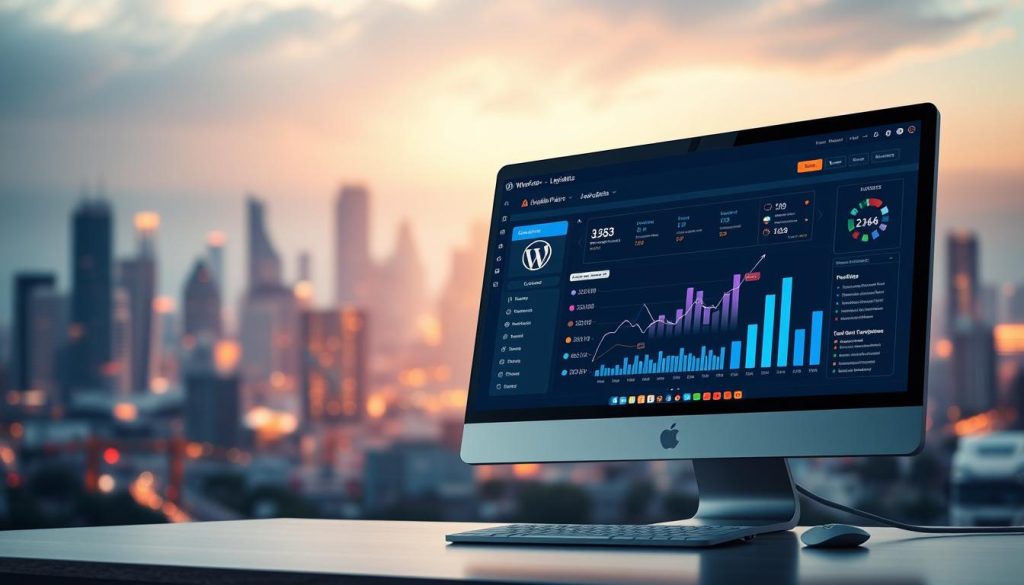
Designs that build trust include showing industry certifications and real-time service availability. Customer testimonials also help, showing reliability and expertise. These elements address the main concern of logistics customers: can you deliver as promised?
Using generic templates can make your business seem less invested. French customers notice design quality, seeing it as a sign of operational standards. A custom WordPress design shows your business is sophisticated and serious.
Implementing Functionality for Logistics Management
Your digital platform needs more than just good looks. It must have features that help both customers and your team. Shipment tracking portals let customers see where their deliveries are, reducing questions and increasing satisfaction.
Instant quotation calculators give clear prices based on many factors. This fast service can win business from customers who want quick answers. This feature makes your logistics software stand out.
Online booking systems let customers book services without calling. They capture all the needed information in a clear way, avoiding mistakes. This system works well with your operational systems, making sure web bookings are handled smoothly.
| Platform Feature | Business Benefit | Customer Advantage |
|---|---|---|
| Real-time tracking portal | Reduced customer service inquiries by 40% | Complete shipment visibility and peace of mind |
| Automated quotation system | Increased conversion rates by 35% | Instant pricing without waiting for responses |
| Online booking interface | 24/7 revenue capture capability | Convenient scheduling outside business hours |
| Customer account portal | Enhanced customer retention and repeat business | Easy access to shipping history and documentation |
Secure customer portals give users access to their shipping history and more. This builds loyalty and provides valuable insights for improving services. These insights help you develop your services and marketing.
Being able to integrate with existing software is key. This ensures your platform works well with other systems. API connections help keep customer and booking information up to date across systems. This reduces errors and boosts efficiency.
Selecting Infrastructure for Reliable Performance
Reliable WordPress hosting is essential for your business. Logistics websites have unique traffic patterns, with busy times during peak shipping periods. Poor hosting can lead to slow performance and damage your reputation.
Hosting needs to handle spikes in traffic without slowing down. Shared hosting can’t provide the reliability needed for critical applications. Dedicated or virtual private servers ensure your site gets the resources it needs, no matter what.
Content delivery networks (CDNs) improve performance for users worldwide. They cache content locally, reducing load times for French visitors. This is important for image-heavy websites, like those showing fleet and facility photos.
Security is vital, with SSL certificates, malware scanning, and intrusion detection protecting sensitive data. Logistics websites handle customer and shipment information, so strong security is essential. It also shows you comply with data protection laws.
Having reliable backups is important, preventing data loss from technical issues or human errors. Daily backups with secure storage ensure your business can keep running even in the worst cases. Being able to restore previous versions is useful for troubleshooting or fixing updates.
Partnering with Specialist WordPress Providers
LerriHost offers WordPress design and redesign services tailored for logistics. Our team knows that logistics websites are both marketing tools and operational systems. We design with user workflows in mind, while keeping the visual appeal.
Generic web design doesn’t work for logistics. Our process starts with understanding your specific needs and target market. This ensures our designs support your business goals, not just look good.
LerriHost’s WordPress web hosting solutions meet the needs of logistics operations. Our servers are optimized for business-critical applications, not just websites. We ensure your site runs smoothly, with guaranteed resources and fast support.
Our technical support team understands logistics, helping solve problems quickly. We know how important your site is, so we fix issues fast. This sets us apart from general hosting companies.
By contacting LerriHost at 07538341308, logistics businesses get WordPress expertise. We help develop your platform, ensuring it supports your growth. Our services grow with your business, handling new markets and services without needing a new platform.
Having a professional web presence is now essential for logistics in France. Customers judge and choose logistics providers online. Your digital platform is your first impression, your ongoing relationship, and often the key differentiator. Investing in WordPress design and hosting is key to success in France.
Step 5: Implementing SEO Strategies for Market Visibility
When French businesses look for logistics solutions, your company’s search ranking is key. Most start their search on Google. So, search visibility is linked to getting more inquiries and growing revenue. Good SEO optimisation is essential for finding new customers in digital logistics.
The French logistics market is tough for search rankings. Keywords like “logistique e-commerce” and “transport de marchandises” are highly competitive. Our strategy combines technical skills with content that meets French business needs, while keeping UK operations visible.
Understanding how logistics buyers search is vital. They use specific terms that reflect their needs. Before contacting you, they research and compare different providers online.
WordPress SEO Optimisation for Logistics Companies
We use WordPress SEO techniques tailored for logistics. We start with a site structure that search engines can easily read. Your website should be organised like how customers think about your services.
Technical optimisation is the base of good rankings. We set up heading hierarchies and use H1 tags for main topics. Meta titles should include target keywords but stay under 60 characters.
Meta descriptions are important in logistics. They should highlight your unique services, like “same-day delivery across Paris.” They don’t affect rankings but boost click-through rates.
Schema markup helps show more information in search results. For logistics, we use LocalBusiness schema and Service schema. This makes your business more visible and credible.
Site speed is critical for logistics websites. We use caching, image compression, and content delivery networks to make pages load fast. Google’s Core Web Vitals now affect rankings, making site speed essential for SEO optimisation.
Mobile responsiveness is key, as most logistics searches are on smartphones. We make sure your WordPress site works well on all devices. This ensures a smooth user experience without needing to zoom or scroll horizontally.
Our content optimisation focuses on keywords French logistics buyers use. We do thorough keyword research to find terms like “livraison express France.” This helps us understand their search behaviour better.
Service pages need to be optimised for specific logistics services. Instead of generic “our services” pages, we create dedicated content for each service. This targets specific keywords and answers customer questions.
Blog content makes your business an industry leader. It targets informational searches. Articles about “navigating French customs regulations” or “reducing logistics costs in e-commerce” attract businesses researching these topics.
Targeting French and UK Audiences Simultaneously
Managing SEO optimisation for both markets requires multi-language strategies. We use hreflang tags to signal which language versions serve which geographic audiences. This ensures French searchers see French content and UK searchers see English.
Country-specific content addresses unique market needs. French pages discuss INCOTERMS interpretation under French commercial law. UK pages focus on post-Brexit customs procedures and British safety standards.
We adjust our strategies for Google.co.uk and Google.fr algorithms. French searches often include specific geographic qualifiers. UK searches tend towards broader service categories. We tailor our keyword strategies to match these differences.
Building authority requires backlinks from UK and French sources. We list in British logistics directories like Logistics UK and French platforms like France Logistique. Industry publications in both countries provide valuable link opportunities.
Translation quality is critical for search visibility in French markets. Machine translations often fail to use natural French business terminology. We work with native French speakers to create authentic content that resonates with French buyers.
Local SEO Tactics for Regional Market Penetration
For specific French regions, we use dedicated local SEO. Google Business Profile optimisation is key for local visibility. This ensures your business appears in “near me” searches and Google Maps results.
We create detailed Business Profiles with accurate address information and service areas. High-quality photos of your facilities and team humanise your digital presence. This improves engagement metrics that influence local rankings.
Local citation building establishes consistency across French directories. We ensure your NAP information (Name, Address, Phone) is the same across listings. Inconsistent information confuses search engines and hurts local rankings.
Location-specific content targets searches with geographic qualifiers. We create dedicated landing pages for each service region. These pages include local landmarks and references to transport infrastructure.
Customer reviews greatly impact search visibility and conversion rates. We encourage satisfied customers to share their experiences on Google and industry platforms. Responding to all reviews shows customer commitment and provides fresh content signals.
Review schema markup displays star ratings in search results. This increases click-through rates. For logistics companies, where trust is key, review displays provide immediate credibility.
| SEO Strategy Component | Implementation Priority | Expected Impact Timeline | Key Success Metrics |
|---|---|---|---|
| Technical WordPress optimisation (site speed, mobile responsiveness, schema markup) | Immediate (Weeks 1-2) | 1-2 months for ranking improvements | Core Web Vitals scores, mobile usability ratings, rich snippet appearances |
| French keyword research and content optimisation | High (Weeks 1-4) | 2-3 months for visibility gains | Keyword rankings for target terms, organic traffic growth, French visitor percentage |
| Google Business Profile and local citations | Immediate (Weeks 1-2) | 3-6 weeks for local pack appearances | Local pack rankings, map views, direction requests, phone calls |
| Backlink acquisition from UK and French sources | Ongoing (Starting Week 2) | 3-6 months for authority building | Domain authority scores, referring domain count, geographic link distribution |
| Review generation and management systems | Medium (Weeks 2-4) | 2-4 months for review volume growth | Review quantity, average rating, review response rate, conversion impact |
LerriHost offers specialised WordPress SEO services for logistics companies targeting French markets. They combine technical SEO optimisation with knowledge of logistics industry search behaviour and French market dynamics.
Their approach tackles logistics challenges, from optimising database-driven tracking systems to implementing multi-language strategies. This ensures your digital marketing investment attracts qualified inquiries from French businesses seeking logistics partners.
By contacting LerriHost at 07538341308, you access SEO expertise focused on metrics like inquiry volume and revenue growth. Their team understands that effective SEO for logistics isn’t just about traffic but attracting the right French businesses at the right time.
We see search visibility as a high-return investment in digital marketing for logistics. When done right, SEO helps French businesses find your services organically. This reduces customer acquisition costs and builds sustainable competitive advantages. The combination of technical excellence, targeted content, and local optimisation increases visibility over time, delivering growing returns as authority builds and rankings strengthen.
Leveraging Digital Logistics Technologies in the French Market
The French logistics market is all about using the latest tech for smarter, faster, and clearer operations. UK businesses entering this market need to pick the right tech to gain an edge. It’s important to choose tech that solves real problems, not just follows trends.
France’s logistics sector is quick to adopt new tech, with big cities like Paris, Lyon, and Marseille leading the way. Customers now expect to see where their goods are in real-time and want easy digital experiences. This creates chances for companies that use the right tech.
Automation and Artificial Intelligence Applications
Logistics automation makes French supply chains more efficient. Artificial intelligence helps plan routes by looking at traffic, weather, and delivery times. This cuts down on fuel use and boosts on-time delivery rates.
Machine learning helps predict demand, so logistics providers can plan better. This means they can use resources well and avoid shortages during busy times. The system gets better over time, thanks to learning from past data.
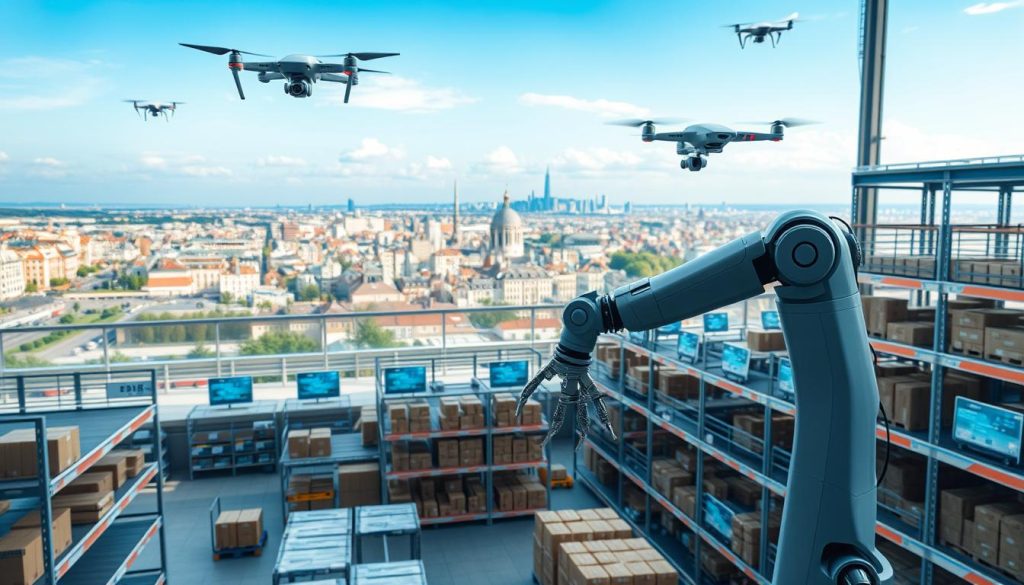
AI also helps keep vehicles and equipment running smoothly. This is key for keeping fleets reliable on France’s long roads. It spots problems before they happen, saving time and money.
Automated warehouses bring big benefits:
- Robotic picking and sorting speed up fulfilment by 40-60%
- They save on labour costs while keeping quality high
- They work 24/7 without needing shifts
- They make fewer mistakes in order handling
- They can handle more work during busy times
Chatbots, powered by natural language processing, handle simple customer questions in English and French. They help answer common queries about shipments, delivery times, and documents. This speeds up responses and cuts down on work.
Internet of Things and Real-Time Tracking Systems
IoT sensors give a full view of how shipments are doing. IoT tracking devices show where things are in real-time. This helps both the people running the logistics and the customers.
Temperature and humidity sensors are key for keeping food and medicines cool during transport. They send alerts if conditions get too hot or too cold. This keeps products safe during transport and storage.
Shock and vibration sensors catch any rough handling that might damage goods. This is important for fragile items that need to be handled carefully. The tech helps prove any damage and shows where it happened.
Using IoT data with logistics systems has many benefits:
- It lets you handle problems early with alerts
- It gives customers a way to track their shipments themselves
- It helps plan routes based on real-time traffic
- It proves when deliveries were made
- It helps improve performance over time
We focus on IoT solutions that work well in France, even in areas with spotty cell coverage. Choosing reliable hardware ensures good performance everywhere.
Blockchain for Enhanced Supply Chain Transparency
Blockchain logistics makes supply chains more open and trustworthy. It’s great for UK-France trade, where many parties are involved. The tech keeps records that can’t be changed and are available to those who need them.
Smart contracts make sure payments are made when deliveries are done right. This cuts down on disputes and speeds up getting paid. The contracts work based on data from IoT sensors and GPS.
Blockchain also keeps records of how goods are handled and who has them. This helps meet rules and meet customer needs, like for medicines and food. It’s very useful for keeping things cool during transport.
Blockchain can also show how green a logistics operation is. French companies want to work with those who care about the environment. Blockchain lets them prove their green efforts.
Using blockchain well means following industry standards and making sure different systems can work together. Start small, with tests on certain routes, before going big. Working with established blockchain platforms can make things easier and cheaper.
Cloud Computing and Data Analytics Platforms
Cloud computing lets logistics grow without needing a lot of IT setup. We use cloud platforms that grow with our business. This means we don’t have to worry about running out of server space or keeping hardware up to date.
Being able to access systems from anywhere is key for teams managing UK-France logistics. Cloud solutions make this easy, as long as there’s internet. They help teams work together, no matter where they are.
Cloud services keep systems up to date and secure without needing a big IT team. This is great for staying safe from cyber threats. The cloud providers handle the tech, so we can focus on our customers.
Data analytics turn operational info into useful insights:
- Performance dashboards track how well deliveries are doing and costs
- Customer behaviour analysis finds ways to improve service
- Benchmark comparisons show how we stack up against others
- Predictive analytics forecast demand and capacity needs
- Financial reporting helps with planning and talking to investors
We use analytics platforms that combine data from different sources. This gives a full view of operations. It helps make better decisions across the board.
Analytics guide our business plans, pricing, and how we improve operations. They help us find profitable customers and routes that need work. This tech helps us keep improving our logistics networks.
Success with tech comes from choosing the right tools for your business goals. We look at each tech option based on its value, how hard it is to set up, and how it stands out from the competition. Picking wisely gives us an edge in France’s competitive logistics market.
Step 6: Navigating French Regulatory and Compliance Requirements
Following French regulations is key to a smooth logistics operation. It helps avoid legal issues and costly disruptions. The rules cover data protection, transport authorisations, employment, and environmental standards.
It’s not just about avoiding fines. Compliance builds trust with customers who value ethical businesses. French authorities enforce these rules strictly, so thorough preparation is essential.
Understanding GDPR and Data Protection Obligations
The General Data Protection Regulation sets strict data protection standards. France adds its own rules on top of GDPR. Logistics activities involve processing personal data, like names and addresses.
GDPR requires a lawful basis for processing data. For logistics, this is usually contractual necessity. We can only collect data genuinely needed for delivery services.
Transparency is key. Privacy notices must explain how data is used. This includes tracking and automated decisions.
Data protection impact assessments are needed for new technologies. They evaluate privacy risks and document how to mitigate them.
Customer rights under GDPR include access, rectification, erasure, portability, and objection. We must respond to these requests within 30 days.
Notifying data breaches to CNIL within 72 hours is mandatory. CNIL is France’s data protection authority, guiding on compliance and investigating breaches.
Post-Brexit, UK businesses must ensure data transfers to France are secure. This includes using Standard Contractual Clauses for data protection.
Transport Licensing and Logistics Certifications
Commercial transport services in France need specific licences. These prove competency, financial standing, and good repute. The licence type depends on the vehicle’s weight.
Professional competency is verified through exams. These cover transport laws, business management, and safety. UK operators now need separate French licences post-Brexit.
Financial standing ensures operators can meet their obligations. The required capital varies by fleet size. We must provide financial statements or guarantees when applying for licences.
Good repute assessments check for criminal records or regulatory violations. Serious offences can prevent licence approval. This highlights the need for ongoing compliance.
Driver qualification includes CPC certificates. French regulations strictly enforce CPC requirements for drivers of heavy vehicles. Drivers must complete 35 hours of training every five years.
Tachograph compliance governs driving hours. Digital tachographs record driving periods and breaks. We must ensure drivers comply with EU regulations to avoid fines.
| Compliance Area | Key Requirements | Responsible Authority | Penalty for Non-Compliance |
|---|---|---|---|
| Data Protection (GDPR) | Lawful processing basis, privacy notices, breach notification within 72 hours | CNIL (Commission Nationale de l’Informatique et des Libertés) | Up to €20 million or 4% of annual turnover |
| Transport Licensing | Professional competency, financial standing (€9,000 first vehicle), good repute | DREAL (Regional Directorate for Environment, Planning and Housing) | Operating prohibition, fines up to €15,000 |
| Driver Qualifications | CPC certification, 35 hours training every 5 years, tachograph compliance | Road Transport Inspectorate | Fines up to €3,750 per violation |
| Environmental Standards | Low emission zone compliance, Crit’Air classification, emissions standards | Local Municipal Authorities | Fines €68-€375, vehicle impoundment |
French labour law impacts logistics operations. Employment contracts must meet French standards. This includes limits on working hours and overtime pay.
Environmental regulations are also important. Low emission zones restrict vehicle access in major cities. This encourages the use of electric vehicles in logistics.
Customs and cross-border compliance are key post-Brexit. AEO status helps with customs clearance. It requires robust record-keeping and security procedures.
Regular audits and training are essential for compliance. Training keeps teams updated on regulatory changes. Legal advisors specialising in French transport and logistics regulations provide valuable guidance.
It’s wise to have a compliance calendar. This tracks renewal deadlines for licences and certifications. Documentation systems should keep records of training, audits, and communications with authorities. This preparation is vital for inspections and shows commitment to compliance.
Managing Financial Services and Cross-Border Operations
Managing finances is key when you work in logistics across the UK and France. It’s about knowing how to handle cross-border operations and taxes. UK businesses entering the French market face financial challenges that need careful planning.
Good financial services help you grow in the French market. They cover everything from setting up operations to managing cash flow and taxes. We look at how UK logistics businesses can work well in France while following all the rules.

Structuring Financial Operations for French Market Entry
The first step in cross-border operations is choosing the right financial setup for France. UK businesses must decide if they’ll manage finances from the UK or set up separate French operations. This choice affects everything from banking to tax rules.
Keeping finances centralised in the UK is simple and controlled. Your UK base handles all financial tasks, making it easier for smaller operations. This works well if you don’t have a lot of transactions in France.
For bigger operations, setting up separate French finances is better. A French subsidiary can handle local market needs quickly. This is needed when you have a lot of transactions in France.
When services move between the UK and France, you need to set fair prices. This is called transfer pricing. Tax authorities in both countries check these prices to make sure profits are split right.
Sharing costs between the UK and France needs clear rules. We suggest using formulas based on revenue, staff, or service use. This makes it easier to explain how costs are split and helps avoid problems with the tax authorities.
Working capital management is tricky in international logistics. French customers might pay later than UK ones. This can cause cash flow issues.
We have tips to help manage these cash flow problems:
- Invoice factoring to get cash from French payments quickly
- Trade credit insurance to protect against bad debts
- Revolving credit for flexible cash needs
- Supply chain financing with big customers
- Dynamic discounting for early payments
Forecasting finances for cross-border work needs to consider many things. This includes currency changes, seasonal demand, and fixed costs in France. We suggest making 12-month forecasts that you update every month to keep up with changes.
Tax Planning and VAT Considerations for UK Businesses
Good tax planning helps reduce your tax bill while following the rules. French corporate tax rates are different from the UK’s. Most businesses pay 25% tax in France, but smaller ones might pay less.
Understanding the UK-France tax treaty is key to avoiding double taxation. This treaty helps you claim foreign tax credits in the UK for taxes paid in France.
Keeping good records is important for tax purposes. You need detailed records of profits and costs in each country. This helps protect your tax position.
French VAT compliance is complex in logistics. Knowing when to register for French VAT is important to avoid fines. It’s also key for smooth business operations.
| VAT Requirement | Threshold/Rate | Application to Logistics | Compliance Action |
|---|---|---|---|
| French VAT Registration | First taxable supply | Required when providing logistics services to French customers | Register before first transaction |
| Standard VAT Rate | 20% | Applies to most logistics services | Charge on invoices to French customers |
| Reverse Charge Mechanism | Varies by service | Shifts VAT responsibility to business customers | Indicate on invoices clearly |
| Input VAT Reclaim | Monthly/quarterly | Recover VAT on French business expenses | Submit periodic VAT returns |
The reverse charge mechanism means customers pay VAT on some B2B services. If you’re providing logistics to French VAT-registered businesses, you can issue invoices without French VAT. The customer then pays the VAT.
To get back VAT on French expenses, you need to keep good records and file VAT returns on time. Keep all French business expense invoices with VAT. File VAT returns as needed, usually monthly or quarterly.
Intrastat reports track goods moving between the UK and France. If you move goods across borders, you must file Intrastat declarations. These reports help authorities monitor trade.
After Brexit, customs duties and import VAT affect cross-border shipments. Goods moving between the UK and France need customs declarations and may face tariffs and import VAT. Working with customs experts is a good idea.
Proper VAT invoicing is important in France. Every VAT invoice must show your French VAT number, the customer’s SIRET number, detailed service descriptions, and VAT calculations. Missing information can make the invoice invalid for VAT purposes.
Local taxes in France affect logistics operations. The taxe foncière (property tax) applies to warehouses and distribution centres. Landlords pass this cost to tenants in lease agreements.
The contribution économique territoriale (local business tax) is based on property value and turnover. This tax funds local services and varies by location. Consider these costs when choosing a site, as rates differ across France.
Currency Risk Management Strategies
Changes in the pound sterling/euro exchange rate can hurt profits in cross-border logistics. A 5% drop in the exchange rate can wipe out profit margins. Effective currency management strategies are needed to protect your business.
Natural hedging matches euro income with euro expenses. This reduces net exposure. We suggest sourcing supplies locally in France and keeping euro cash reserves to maximise this natural hedge.
Forward contracts fix exchange rates for future transactions. This gives certainty for pricing and budgeting. If you know you’ll receive €500,000 in six months, you can lock in the exchange rate today. This removes currency risk for that transaction.
Currency options offer protection against bad exchange rate movements while keeping upside opportunities. Unlike forward contracts, options let you choose when to exchange currency at a set rate. You pay a premium for this flexibility but benefit if rates improve.
Currency risk policies set acceptable exposure levels and when to use hedging tools. We recommend clear rules, like hedging all committed transactions over €100,000 or keeping exposure below 10% of annual revenue. These policies ensure consistent risk management.
Treasury management systems track currency positions and automate hedging. Modern systems integrate with accounting systems for real-time visibility of currency risks. Automated alerts notify you when risks exceed policy thresholds.
LerriHost’s financial services connect UK logistics businesses with experts for international operations. Our network includes tax advisors, currency specialists, and financial consultants for multi-country operations.
By contacting LerriHost at 07538341308, you get access to financial expertise for your French logistics expansion. Our introductions help you avoid costly mistakes and set up financial operations that support growth. We connect you with professionals who structure arrangements for tax efficiency and VAT compliance.
Advanced financial management is a big advantage in cross-border logistics. It leads to better cash flow, tax positions, and currency management that protects profit margins. The complexity of cross-border finances shouldn’t stop you from entering the French market. With the right planning and expert advice, you can set up financial systems that enable growth while following all the rules.
Step 7: Maintaining and Optimising Your Digital Operations
Digital platforms in the logistics sector need constant care to stay competitive and secure. Your WordPress logistics website is like a living thing that needs regular updates. We know that WordPress maintenance is key to success in France’s fast-changing market.
The market is always changing, with customers wanting more and technology getting better all the time. Your digital setup must keep up to stay relevant and effective. Without regular maintenance, websites can slow down, become vulnerable to attacks, and fall behind competitors.
WordPress Maintenance for Continuous Performance
Regular maintenance keeps your logistics website running smoothly and supports your business goals. We see WordPress maintenance as a strategic effort, not just fixing problems as they arise. We schedule activities to prevent issues before they happen.
WordPress updates bring important security fixes and new features. These updates protect against threats that hackers use, so applying them quickly is vital. We test updates in a staging area before making them live.
Updating themes keeps your site looking good on all devices and browsers. Old themes can cause problems, making your site look bad on different screens. Keeping your theme up to date ensures your brand looks great everywhere.
Plugin updates are essential for keeping your site’s functionality, like booking systems and tracking tools. These plugins are critical for logistics sites. Outdated plugins can cause problems, so keeping them current is important.
Testing updates before they go live helps avoid problems. We use staging areas to test updates thoroughly. This way, we catch any issues before they affect your site.
Keeping your site’s content up to date is also important. This includes:
- Service descriptions that reflect your current offerings
- Pricing that matches your current rates
- Blog posts that show your industry knowledge
- Removing old information that might confuse visitors
- Updated case studies of successful deliveries
Monitoring your site’s functionality ensures everything works as it should. We test your site weekly to check for any issues. This helps catch problems before they affect your business.
Regular Security Updates and Backup Protocols
Website security is vital for protecting your customers’ data and keeping your site running smoothly. Logistics sites handle sensitive information, making them targets for hackers.
Using multiple security layers helps protect your site from different threats. We set up Web Application Firewalls to block malicious traffic. This stops many attacks before they reach your site.
Malware scanning finds and removes harmful code. We scan your site daily to catch any threats early. This helps prevent damage and makes fixing problems easier.
Strong login security stops unauthorised access. We use strong passwords, two-factor authentication, and limit login attempts. This makes it hard for hackers to get in.
SSL certificates keep data safe when it’s sent between your site and visitors. Without them, browsers may warn users, scaring them away. SSL certificates are essential for keeping your site secure.
| Security Component | Protection Provided | Implementation Priority | Update Frequency |
|---|---|---|---|
| Web Application Firewall | Blocks malicious traffic patterns | Critical | Rule updates weekly |
| Malware Scanning | Detects infected files | Essential | Daily automated scans |
| Login Security | Prevents unauthorised access | Critical | Policy review quarterly |
| SSL Certificates | Encrypts data transmission | Mandatory | Annual renewal |
Backup protocols help keep your site running if security breaches or technical issues happen. We make daily backups of your site’s data and files. This ensures you can recover quickly if needed.
Storing backups off-site protects against server failures or other disasters. We keep backups in different locations to ensure you can recover even if your main site is down.
Testing your backups regularly is important. Many businesses find out their backups don’t work when they need them most. We test your backups monthly to make sure they’re good to go.
Having a disaster recovery plan helps you get back up and running quickly. It outlines how to restore your site and how to keep customers informed during the process. This helps you recover faster and keeps your customers happy.
Performance Monitoring and Analytics Implementation
Regular performance optimisation keeps your site fast and competitive. We monitor your site’s performance to catch any problems before they affect your business.
Page load speed is key to a good user experience. Slow sites can lose visitors quickly. We keep an eye on your site’s speed to make sure it’s fast.
Uptime monitoring alerts us if your site goes down. We check your site every five minutes to catch any issues quickly. This helps you avoid losing business due to downtime.
Conversion funnel analysis helps you see where visitors drop off. By tracking how visitors move through your site, we can find areas to improve. This helps you turn more visitors into customers.
Analytics give you valuable insights into how your site is performing. Google Analytics helps you understand how visitors find and use your site. With the right setup, you can learn a lot about your site’s performance.
Core Web Vitals monitoring focuses on specific metrics that Google uses to rank sites. By improving these metrics, you can make your site better for users and search engines alike.
A/B testing helps you find the best ways to improve your site. By testing different versions of your site, you can see what works best. This approach is based on real data, not just guesses.
LerriHost’s WordPress maintenance services are designed for logistics sites. We offer ongoing management that meets your specific needs. Our team is here to help you keep your site running smoothly.
Regular performance optimisation ensures your site stays competitive. We understand the unique needs of logistics sites, from handling busy periods to keeping integrations working well.
By contacting LerriHost at 07538341308, you get access to our expertise. We help turn your digital infrastructure into a strategic advantage. Regular maintenance is a smart investment in your site’s success.
Developing Competitive Advantages in Digital Logistics
In France’s logistics market, gaining a competitive edge comes from focusing on what customers need most. Just entering the market isn’t enough to succeed. We must offer something unique that makes French businesses choose us over others.
The digital logistics sector in France is mature, with big players and strong connections. Our success depends on finding gaps in what’s already offered and using our resources to fill them. By innovating with technology, forming strategic partnerships, and delivering top-notch service, we can stand out.
Keeping ahead means always investing in new ideas. As others see what works, they try to copy us. We must keep innovating to stay ahead and keep making money.
Differentiating Your Services Through Technology
Using technology wisely can give us a strong edge. We should focus on solving real problems for French logistics customers. For example, our own route optimisation algorithms can make deliveries faster and cheaper.
Customers want to see what’s happening with their orders in real time. They want to be able to track their packages and schedule pickups online. These digital tools must work well with what businesses already use.
- Predictive delivery windows: Our algorithms give accurate delivery times, not just days.
- Automated exception management: We catch and fix delivery problems before they affect customers.
- Sustainability tracking: We help businesses track their carbon footprint in the supply chain.
- Dynamic capacity allocation: Our tech makes sure vehicles are used efficiently, cutting down on empty runs.
It’s important to balance spending on technology with keeping prices low. Technology should make our service better and more efficient, not more expensive. We need to make sure each new tech investment is worth it.
Choosing the right technology is key. Just adopting the latest tech won’t give us an edge if others do the same. We need to find unique solutions that no one else offers.
Building Strategic Partnerships with French Logistics Providers
Working with established French logistics providers can really help us get started and improve our services. These partnerships give us access to local knowledge, customers, and rules that would take years to learn on our own. Good partnerships create value for both sides and help us avoid big risks on our own.
There are different types of partnerships for different goals:
| Partnership Model | Structure | Primary Benefits | Key Considerations |
|---|---|---|---|
| Subcontracting Arrangements | We handle specific routes or service types for larger French providers | Immediate revenue generation, market learning, operational experience | Limited customer ownership, dependence on partner volume |
| Reciprocal Partnerships | UK and French providers exchange capacity and extend service networks | Geographic expansion, balanced mutual dependence, shared resources | Requires compatible service standards and operational processes |
| Joint Ventures | Collaborative entities for specific service offerings leveraging complementary capabilities | Shared investment risk, combined expertise, formal governance structures | Complex legal formation, possible strategic conflicts, exit provisions |
| Technology Partnerships | Integration of our digital platforms with French providers’ operational systems | Enhanced service visibility, expanded digital capabilities, differentiated offerings | Data sharing protocols, intellectual property protection, system compatibility |
Finding the right partner means looking at their skills, reach, culture, and goals. Partners who share our values and standards make for stronger, more reliable relationships. We should check their financial health, reputation, and customer base.
Clear agreements are key for successful partnerships. Contracts should outline service standards, how to share profits, who owns the customer, performance goals, and how to end the partnership. These details prevent disputes that could harm our reputation and operations.
Partnerships come with risks and benefits. Relying too much on a partner can be risky. If they become competitors, it could hurt us. We need to make sure our partnerships are fair but also keep our independence.
Creating Value Through Customer Experience Innovation
Offering a better customer experience can give us a lasting edge in France’s logistics market. French businesses value reliability, clear communication, and flexibility. Delivering exceptional service builds loyalty that keeps customers coming back, even if others offer lower prices.
Customer experience in digital logistics covers many areas:
- Communication frequency and proactivity: We keep customers updated with automated messages and respond quickly to their needs.
- Delivery flexibility: We meet customers’ specific needs with flexible delivery times and options.
- Simplified processes: Our digital tools make it easy for customers to get quotes, book services, and manage shipments.
- Personalised service: We tailor our service to each customer’s unique needs and challenges.
We map out every interaction with our customers to find ways to improve. By understanding what frustrates them about other services, we can offer better solutions.
Measuring customer satisfaction helps us get better. Surveys, Net Promoter Score tracking, and customer advisory boards give us valuable feedback. French businesses value personal service, making regular communication and feedback culturally fitting and strategically smart.
Exceptional customer service leads to word-of-mouth marketing in the French logistics market. Happy customers recommend us to others, which is more cost-effective and sustainable than trying to attract new customers.
Great customer service also makes it harder for customers to switch. Once they’ve experienced reliable service, they’re less likely to change, even for a small price drop. The risk and disruption of switching logistics providers outweighs any savings for most businesses.
To stay ahead, we must keep innovating. Our commitment to investing in technology, partnerships, and customer experience keeps us competitive. The French digital logistics market rewards those who adapt to changing customer needs and technological advancements.
Measuring Success with Key Performance Indicators
Tracking performance turns raw data into insights that help improve. Entering France’s digital logistics market needs a lot of investment. It’s important to measure the return on that investment with the right metrics.
Choosing the right indicators is key. We focus on KPIs that show customer value and competitive advantage in France. This way, our efforts give us useful insights, not just numbers.
Critical Performance Indicators for Logistics Operations
We track many metrics to see how our French logistics are doing. On-time delivery percentage shows if we meet customer expectations. It checks if shipments arrive on time.
Shipment damage rates show how well we handle goods. They help us find ways to reduce costly claims. Vehicle utilisation rates help us use our assets better, which can make us more profitable.
We also look at how our services meet market expectations. Customer satisfaction scores help us know if we’re doing well. Net Promoter Score tells us if customers would recommend us.
Customer retention rate shows if we keep customers happy. Customer acquisition cost tells us if our marketing and sales are working well in France.
| Metric Category | Key Indicator | Target Benchmark | Strategic Importance |
|---|---|---|---|
| Operational Efficiency | On-time delivery rate | 95-98% | Customer satisfaction foundation |
| Customer Loyalty | Net Promoter Score | Above 50 | Growth through referrals |
| Financial Health | Operating margin | 12-18% | Sustainable profitability |
| Digital Effectiveness | Website conversion rate | 3-5% | Digital channel optimisation |
Financial metrics check if our operations are profitable. Revenue per shipment shows if we’re pricing right. Operating margin tells us if we can keep making money long-term.
Digital metrics track how well our tech supports our goals. Website conversion rates show if our online presence works. Online booking percentage shows if more customers are booking online in France.
Evaluating Investment Returns and Market Position
ROI measurement compares profits to total investment. We consider all costs, like setting up and marketing. It takes time to see returns, often years.
Market penetration metrics show our place in France’s logistics. We look at our share in key segments. Customer base growth rate shows if we’re getting more customers.
Geographic expansion shows if we’re covering more of France. This tells us if we’re meeting the needs of bigger customers.
Digital channel effectiveness needs special measurement. Organic search traffic growth shows if our SEO is working. Lead quality scores check if our marketing is attracting the right customers.
Leveraging Advanced Analytics for Strategic Advantage
Data analytics turns past performance into future insights. Predictive analytics forecast demand, helping us plan better. We catch customers at risk early to keep them.
Prescriptive analytics gives us the best actions based on data. It suggests changes we might not think of. Combining human insight with data leads to better decisions.
Data visualisation makes complex data easy to understand. Dashboards help everyone see trends and patterns. We focus on what needs attention, not too much data.
Root cause analysis finds why things go wrong. Process mining finds bottlenecks in our workflows. This helps us improve and please our customers.
Good performance management creates a cycle of improvement. We see measurement as a way to get better, not just to track. This approach helps us stay competitive in France’s digital logistics market.
Your Roadmap to Success in France’s Digital Logistics Market
The French market is full of chances for UK logistics companies. They can grow by investing in digital changes and improving across borders. Our detailed plan helps you meet legal needs, create strong digital sites, and stand out in this fast-paced field.
Success comes from following our outlined strategies carefully. Your plan must balance today’s needs with future growth. Getting legal, setting up payments, and making professional WordPress sites are key steps for lasting success.
Setting realistic goals is important. Most firms need one to three years to make money in France. Starting small with test routes or a few customers helps lower risks and gives valuable insights.
LerriHost helps you at every step. We offer services like forming companies, setting up banking, and more. Our WordPress services keep your online presence strong and reliable.
Get in touch with LerriHost at 07538341308 to talk about your goals for the French market. Our team knows how all parts of your plan fit together. We can help you move forward faster and avoid big risks.
UK logistics firms following this plan will be ready to grab market share. They can build profitable operations that meet France’s need for new, tech-smart logistics solutions.